
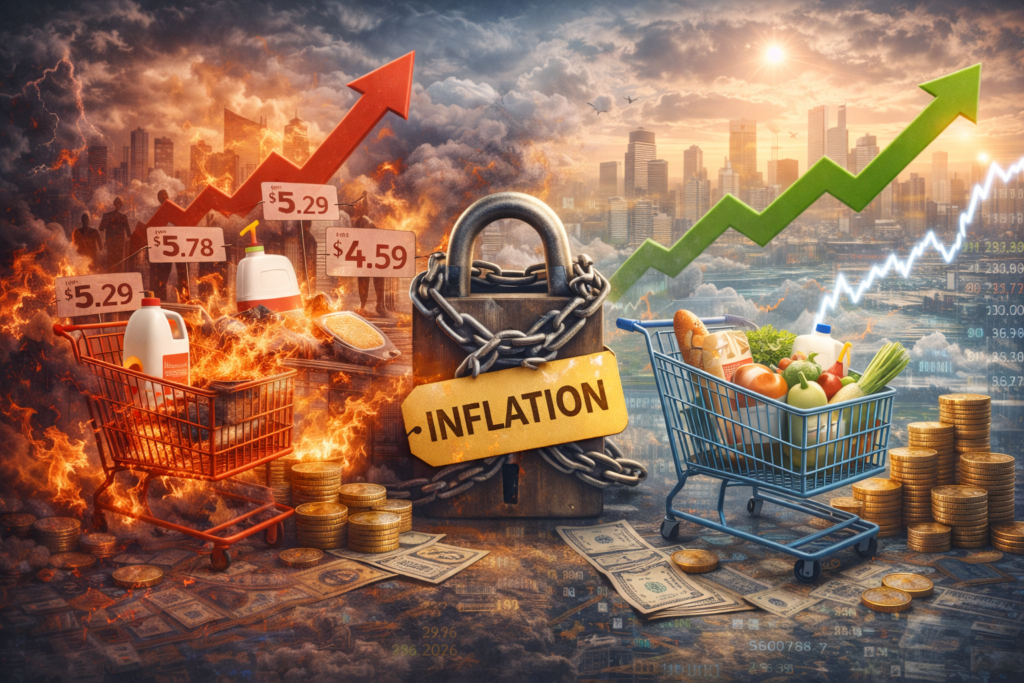
For a while, inflation seemed to be moving in the right direction.
Price pressures were easing. Supply chains had become less chaotic. Central banks had spent several years raising interest rates, and those decisions were beginning to slow demand. Many economists expected 2026 to bring a quieter economic environment.
Then energy returned to the center of the story.
The latest geopolitical tensions have pushed fuel costs higher and complicated what had looked like a gradual path back toward stability. Inflation has not returned to the extreme levels seen earlier in the decade, but the idea that the problem had been fully solved now looks premature.
So, is the worst finally over?
The most honest answer is that the worst phase of broad, uncontrolled inflation may be behind us.
But the economy is not yet back to normal.
Inflation in 2026 is more uneven, more sensitive to external shocks and more frustrating for households than a simple headline number suggests.
Inflation Has Changed, Not Disappeared
The inflation shock of the early 2020s affected almost everything at once.
Energy prices rose.
Food became more expensive.
Supply-chain disruptions increased the cost of goods.
Housing costs placed greater pressure on household budgets.
Labor shortages encouraged faster wage growth in several industries.
The current picture is different.
Some of those pressures have moderated. Supply chains are functioning more normally than during the pandemic. Demand has cooled as borrowing costs increased. Wage growth is becoming less extreme in some economies.
But inflation has not vanished.
It has become more selective.
Instead of rising everywhere at the same speed, prices are now being pushed higher by specific pressure points: energy, food inputs, rents, insurance and selected services.
This distinction matters because it changes how households experience inflation.
A consumer may read that inflation is moderating overall while still paying noticeably more for fuel, electricity, groceries or housing.
The statistics can improve before daily life feels easier.
Energy Has Complicated the Recovery
Energy prices remain one of the fastest ways for a geopolitical crisis to affect ordinary households.
When oil and gas become more expensive, the impact does not stop at petrol stations or electricity bills.
Transport companies face higher costs.
Manufacturers pay more to operate factories.
Farmers spend more on fuel and fertilizer.
Retailers pay more to move products.
Airlines face pressure on margins.
Restaurants and food producers absorb additional expenses.
Eventually, part of those costs reaches the consumer.
This is why central banks take energy shocks seriously even when they cannot solve the original problem directly.
Higher interest rates cannot produce more oil.
They cannot reopen a disrupted shipping route.
They cannot resolve a geopolitical conflict.
But policymakers still need to prevent temporary price increases from spreading more deeply into the economy.
The real danger is not a short-lived spike in fuel prices.
It is the possibility that businesses begin raising prices more broadly, workers demand larger wage increases to protect purchasing power and inflation expectations drift upward again.
Once inflation becomes embedded in everyday behavior, bringing it down is much harder.
Falling Inflation Does Not Mean Falling Prices
One of the most common misunderstandings about inflation is that a lower rate means prices are returning to where they were before.
Usually, they are not.
If inflation falls from 8% to 3%, prices are still rising.
They are simply rising more slowly.
This matters because households do not experience inflation through charts.
They experience it through the supermarket, rent payments, insurance renewals and monthly bills.
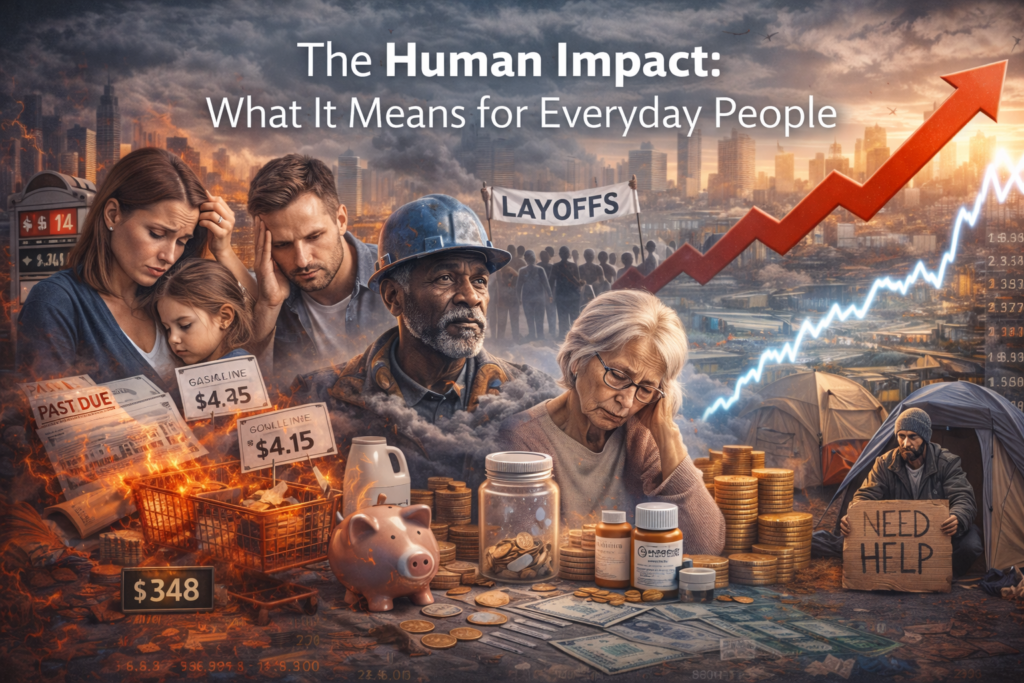
A family may hear that inflation is improving and still feel financially squeezed because the overall cost of living remains substantially higher than it was several years ago.
This explains the gap between economic data and public sentiment.
Economists may see progress.
Consumers may feel that life is still expensive.
Both perspectives can be correct.
The rate of inflation has improved compared with its worst moments.
The accumulated increase in prices has not disappeared.
The Eurozone Shows How Quickly the Picture Can Change
Europe illustrates the difficulty of declaring victory too early.
At the beginning of 2026, inflation in the euro area had fallen to relatively subdued levels. By May, the annual rate had climbed again, driven heavily by energy.
This does not mean Europe is returning automatically to the inflation crisis of previous years.
But it does show how vulnerable the economy remains to external shocks.
The European Central Bank now faces a difficult balancing act.
If it reacts too aggressively, it risks weakening growth further.
If it responds too cautiously, energy-driven inflation could spread into food, goods and services.
The challenge is especially serious because European economies do not all respond in the same way.
Some households have fixed-rate mortgages.
Others feel changes in borrowing costs more quickly.
Some countries depend more heavily on imported energy.
Others have more room to protect vulnerable consumers.
Inflation may be measured across the eurozone.
Its consequences remain personal and local.
The United States Faces a Similar Problem Through a Different Lens
The United States is also dealing with renewed inflation pressure.
The Federal Reserve’s preferred inflation measure moved higher in early 2026, with energy costs playing an important role. Core inflation, which excludes food and energy, has also remained above the central bank’s long-term target.
This creates a difficult message for markets.
Investors would like lower interest rates.
Consumers would welcome cheaper borrowing.
Businesses would benefit from easier financing.
But the Federal Reserve cannot reduce rates aggressively while inflation remains uncomfortable.
This is why markets react so strongly to economic data.
A strong inflation report can reduce expectations of future rate cuts.
A weaker labor-market report can revive them.
A rise in oil prices can alter the discussion again within days.
Monetary policy is no longer following a smooth path.
It is reacting to an economy that keeps changing the question.
Core Inflation Still Matters
Energy prices attract attention because they move quickly and affect everyday life visibly.
Core inflation matters because it reveals whether price pressure is spreading more deeply.
Services are especially important.
Rent, hospitality, transport, healthcare, insurance and professional services do not always respond as quickly as fuel or goods prices. They can remain elevated even after supply chains improve.
Part of the reason is that services rely heavily on labor.
Wages do not behave like commodity prices.
A company may pay less for fuel next month, but it is unlikely to reduce salaries simply because energy costs have eased.
This makes services inflation more persistent.
It is one reason central banks hesitate to declare victory based only on a few encouraging monthly reports.
The question is not merely whether oil prices fall.
It is whether the broader economy is gradually returning to a more stable pricing environment.
Food Prices Remain a Sensitive Pressure Point
Food inflation deserves separate attention because it affects households unequally.
A higher-income family may absorb a modest rise in grocery costs without changing its lifestyle significantly.
A lower-income household has less flexibility.
Food already represents a larger share of its monthly spending. A rise in prices forces harder choices.
Energy shocks can intensify this pressure indirectly.
Agriculture depends on fuel, transport and fertilizer. Food processing requires energy. Retailers need refrigeration and logistics networks.
A disruption that begins in oil or gas markets can eventually appear in the price of everyday essentials.
This is why headline inflation can feel more painful than the number suggests.
Not every price increase carries the same emotional or economic weight.
A more expensive luxury item is inconvenient.
A more expensive weekly food shop is unavoidable.
Housing Costs Continue to Create Frustration
Housing remains one of the most stubborn sources of financial pressure.
Even when mortgage rates stop rising, the cost of purchasing a home may remain difficult to manage because property prices are still elevated and monthly payments are substantially higher than during the low-rate era.
Renters face a different version of the same problem.
Many potential buyers remain in the rental market for longer because ownership has become less accessible. That additional demand can push rents higher, especially in cities where housing supply remains limited.
This creates a frustrating cycle.
High mortgage costs keep people renting.
Strong rental demand raises rents.
Higher rents make saving for a deposit more difficult.
Homeownership moves even further away.
Inflation therefore affects more than the price of goods.
It shapes life decisions.
People delay moving out, purchasing a home, changing jobs or forming families because housing absorbs too much of their income.
Central Banks Have Less Room for Error
Inflation places central banks in an uncomfortable position.
Raising interest rates can slow demand and prevent price increases from spreading.
But higher rates create costs.
Mortgages become more expensive.
Business investment weakens.
Governments pay more to service debt.
Property markets become less affordable.
Highly leveraged companies face greater pressure.
Lowering rates too soon creates a different risk.
Inflation may accelerate again.
Markets may interpret the decision as a sign that policymakers are becoming less serious about price stability.
The difficulty in 2026 is that inflation and growth are moving in the wrong direction at the same time.
Energy shocks raise prices while reducing purchasing power.
Consumers spend more on essentials and less elsewhere.
Businesses face higher costs.
Growth slows.
This is not the type of inflation central banks can resolve easily.
The policy options are real.
None of them are painless.
Emerging Economies Face a More Difficult Version of the Problem
Inflation is a global issue, but it does not affect every country equally.
Emerging and developing economies can face additional pressure from currency depreciation, imported energy costs and more expensive debt.
When a local currency weakens, imported goods become more expensive.
Fuel costs rise.
Food prices may increase.
Central banks may need to keep interest rates high even when domestic growth is already fragile.
Governments also have fewer resources to protect households.
A wealthy country may introduce temporary support measures or absorb part of the shock through its budget.
A lower-income country may have much less room to act.
This is why global inflation statistics can hide important differences.
An average can improve while millions of households continue facing severe pressure.
Inflation is not only an economic variable.
It is also a question of resilience and inequality.
Businesses Need to Plan for Volatility, Not One Forecast
For companies, the most dangerous assumption is that prices will behave exactly as expected.
Businesses should not build their plans around one optimistic scenario in which energy costs fall quickly, inflation returns smoothly to target and interest rates decline on schedule.
Reality is less cooperative.
A sensible strategy includes flexibility.
Can the company absorb a rise in transport or electricity costs?
Does it depend too heavily on one supplier?
Can it adjust prices without losing customers?
How much debt needs refinancing?
Would higher interest rates damage cash flow?
Which expenses are essential and which can be postponed?
The strongest businesses are not those that predict every shock correctly.
They are those capable of adapting when forecasts fail.
Consumers Need to Focus on What They Can Control
Households cannot control oil prices, central-bank decisions or geopolitical events.
They can strengthen their financial position.
A realistic budget matters.
An emergency reserve matters.
Reducing expensive variable-rate debt matters.
Comparing savings accounts matters.
Avoiding a mortgage that stretches finances too far matters.
This does not mean households should panic or stop spending entirely.
It means leaving room for uncertainty.
A family with manageable fixed expenses has greater freedom when prices rise unexpectedly.
A household already spending almost everything it earns has very little margin.
Inflation is difficult because it removes choices quietly.
Financial resilience restores some of them.
Investors Should Distinguish Between Inflation and Inflation Fear
Inflation can affect investments in different ways.
Stocks may struggle when higher rates reduce valuations or squeeze corporate margins.
Bonds can lose value when yields rise, although higher yields may create more attractive opportunities for new investors.
Real estate may benefit from rising rents but suffer from expensive financing and maintenance costs.
Cash earns more interest in a higher-rate environment but may still lose purchasing power after inflation.
Commodities can provide some protection during selected shocks but remain volatile.
There is no perfect inflation-proof asset.
This is why diversification matters.
Investors should also avoid reacting emotionally to every inflation report.
One month does not define a long-term trend.
But one month can reveal that the economy remains more fragile than expected.
The goal is not to predict each data release.
It is to build a portfolio that can survive several possible outcomes.
What to Watch During the Rest of 2026
Several indicators will help determine whether inflation is stabilizing or becoming more persistent.
Energy prices remain central.
A lasting decline in oil and gas costs would reduce pressure across the economy.
Food prices matter because fertilizer and transport costs can affect household budgets with a delay.
Core inflation matters because it shows whether price pressure is spreading beyond energy.
Wage growth matters because services inflation is difficult to contain when labor costs continue rising rapidly.
Housing matters because rents and mortgage affordability shape household finances.
Central-bank communication matters because expectations influence borrowing costs before official decisions take effect.
Finally, geopolitics matters because the inflation outlook can change quickly when energy supply or global trade is disrupted.
The path toward stability still exists.
It is no longer a straight line.
Conclusion
Is the worst of inflation finally over?
Probably—if the comparison is with the broad and intense inflation shock that followed the pandemic.
But the more objective conclusion is that the world has not returned to a comfortable inflation environment.
Price pressures have become less uniform and more vulnerable to sudden shocks.
Energy costs remain a major risk.
Food prices can respond with a delay.
Housing continues to place pressure on household budgets.
Core inflation remains important because services do not cool as quickly as goods.
Central banks still need to balance price stability against weaker growth.
Inflation in 2026 is not the same crisis the world faced several years ago.
It is a more uneven and unpredictable version of the problem.
The worst may be behind us.
The uncertainty is not.