
Bitcoin and traditional financial markets were once seen as two completely separate worlds. On one side stood a decentralized digital currency born from technology and cryptography; on the other, a global financial system built around banks, central authorities, and regulated institutions. Over time, however, these worlds have begun to overlap in meaningful ways.
Today, Bitcoin is no longer just a technological experiment or a niche asset for early adopters. It has become part of broader financial conversations, influenced by macroeconomic trends, investor sentiment, and global market conditions. At the same time, traditional financial markets are adapting to a digital era shaped by innovation, data, and alternative assets.
Exploring Bitcoin alongside financial markets helps us better understand how modern investing is evolving—and what it means for the future of money, risk, and opportunity.
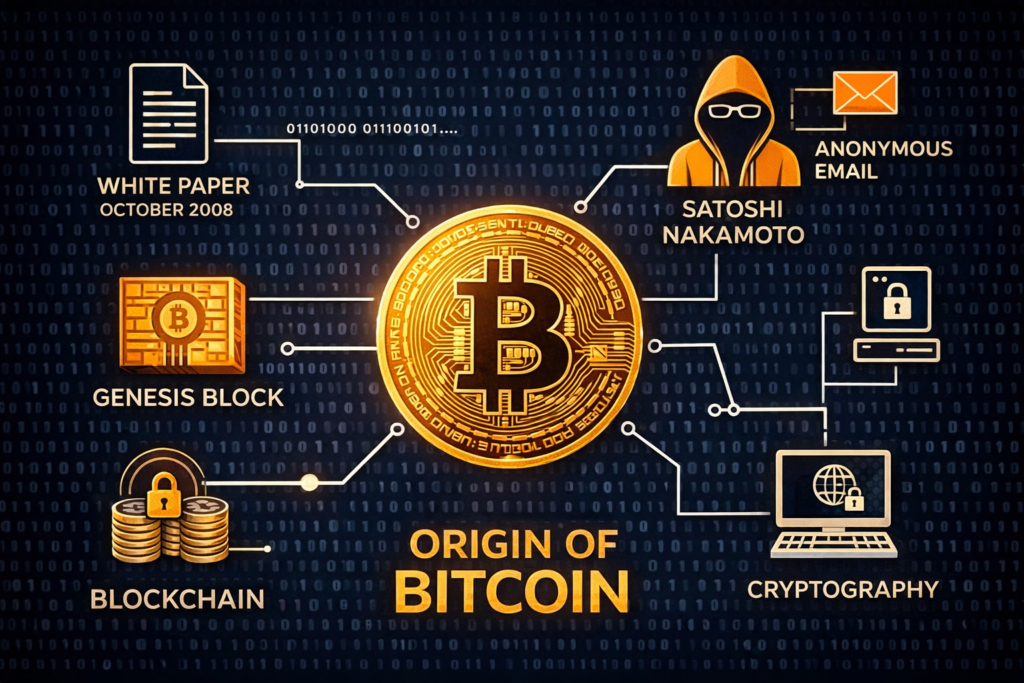
The Origins of Bitcoin and Its Financial Context
Bitcoin was introduced in 2009 as a response to the global financial crisis. Its creator envisioned a peer-to-peer system that could operate without intermediaries, offering transparency, security, and resistance to centralized control.
In its early years, Bitcoin existed largely outside the traditional financial system. It was driven by technology enthusiasts, libertarians, and early investors willing to experiment with a new form of money.
Traditional markets, meanwhile, continued to operate based on established rules, institutions, and monetary policies. For a long time, there was little interaction between Bitcoin and mainstream finance.
That separation no longer exists.
Bitcoin’s Transition Into a Global Asset
As Bitcoin gained attention, liquidity, and market value, it became harder for financial markets to ignore. Over the years, Bitcoin has evolved from a niche digital currency into a globally traded asset.
This transition did not happen overnight. It involved the development of exchanges, custody solutions, regulatory discussions, and financial products that made Bitcoin more accessible to a wider audience.
Today, Bitcoin is analyzed alongside stocks, bonds, commodities, and currencies. Its price movements are discussed in financial media, tracked by institutional investors, and influenced by global economic events.
Bitcoin may still be unique, but it is no longer isolated.
Understanding Financial Markets in a Changing World
Financial markets reflect the collective behavior of millions of participants responding to information, expectations, and economic conditions.
Interest rates, inflation, corporate earnings, geopolitical events, and technological innovation all shape how capital flows across markets. Stocks, bonds, currencies, and commodities respond differently to these forces, creating a complex and interconnected system.
Bitcoin has entered this system as a new variable—one that does not fit neatly into traditional categories but interacts with them in increasingly visible ways.
Bitcoin and Macroeconomic Forces
One of the clearest links between Bitcoin and financial markets is macroeconomics.
Central bank policies, especially interest rate decisions, have a direct impact on investor behavior. When liquidity is abundant and borrowing costs are low, investors tend to take more risk, often benefiting assets like Bitcoin. When conditions tighten, risk appetite can decline.
Inflation has also played a role in shaping Bitcoin narratives. Some investors view Bitcoin as a hedge against currency debasement due to its fixed supply. While this view remains debated, inflation concerns continue to influence demand.
Bitcoin’s price does not move in isolation—it reflects how investors interpret the broader economic landscape.
Bitcoin and Equity Markets: A Growing Connection
In recent years, Bitcoin has shown periods of correlation with equity markets, particularly technology stocks.
When stock markets rally on positive economic news or supportive monetary policy, Bitcoin often follows. During market sell-offs driven by fear or tightening financial conditions, Bitcoin can experience similar pressure.
This connection suggests that many investors now treat Bitcoin as part of the broader risk asset universe, at least in the short term.
Understanding this relationship helps investors interpret Bitcoin’s behavior more realistically.
Volatility: A Shared Characteristic
Volatility is a defining feature of both Bitcoin and financial markets, though it is often more pronounced in Bitcoin.
Market volatility reflects uncertainty, shifting expectations, and changes in liquidity. In Bitcoin markets, this volatility is amplified by 24/7 trading, global participation, and varying levels of market maturity.
Financial markets experience volatility during earnings seasons, policy announcements, or geopolitical events. Bitcoin reacts to many of the same triggers—often with greater intensity.
Rather than viewing volatility as a flaw, experienced investors see it as a natural part of market dynamics.
Institutional Investors Bridge the Gap
Institutional investors have played a key role in connecting Bitcoin with traditional financial markets.
Hedge funds, asset managers, and corporations now include Bitcoin in portfolios, trading strategies, or balance sheets. Their participation has brought larger capital flows, improved liquidity, and more sophisticated market behavior.
Institutions also bring macro-driven strategies, tying Bitcoin more closely to global economic indicators and financial cycles.
This shift has changed how Bitcoin is perceived—from a speculative experiment to an asset that must be analyzed within a broader financial framework.
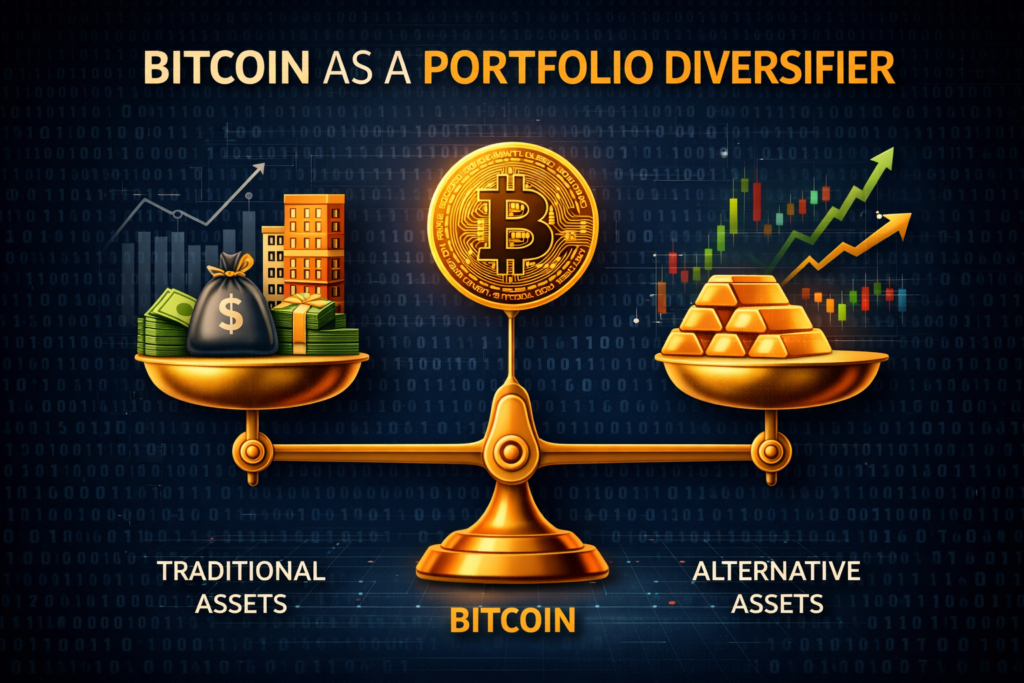
Bitcoin as a Portfolio Diversifier
One of the most discussed roles of Bitcoin in financial markets is diversification.
Historically, Bitcoin has sometimes behaved differently from traditional assets, offering potential diversification benefits. While correlations can increase during market stress, Bitcoin’s unique characteristics still make it appealing to investors seeking alternative exposure.
Smart portfolio construction does not rely on a single asset. Instead, it balances risk and opportunity across multiple markets—including digital assets like Bitcoin.
Market Psychology and Investor Behavior
Both Bitcoin and financial markets are driven by human behavior.
Fear, optimism, uncertainty, and speculation influence decisions across all asset classes. Bitcoin markets, in particular, are known for rapid shifts in sentiment driven by news, social media, and narratives.
Financial markets are not immune to these forces. Investor psychology plays a central role in market cycles, bubbles, and corrections.
Understanding sentiment is just as important as understanding fundamentals.
Regulation and Its Market Impact
Regulation remains one of the most important factors shaping the relationship between Bitcoin and financial markets.
Clear and balanced regulation can increase confidence, attract institutional participation, and stabilize markets. Restrictive or uncertain regulation can create volatility and slow adoption.
As governments and regulators continue to define their approach to digital assets, Bitcoin’s integration into financial markets will evolve accordingly.
Long-Term Trends Versus Short-Term Noise
Exploring Bitcoin and financial markets requires distinguishing between long-term trends and short-term fluctuations.
Daily price movements often reflect noise, speculation, or temporary reactions. Long-term trends are driven by adoption, technological progress, economic shifts, and structural changes in markets.
Investors who focus only on short-term movements risk missing the bigger picture.
Bitcoin’s Role in the Future Financial Landscape
Bitcoin’s future role within financial markets remains open to debate.
Some see it as a long-term store of value, others as a hedge, and some as a speculative asset. What is clear is that Bitcoin has earned a place in financial discussions worldwide.
As markets continue to digitize and innovate, Bitcoin represents a broader shift toward decentralized, transparent, and global financial systems.
What Investors Can Learn From This Intersection
Exploring Bitcoin alongside financial markets highlights the importance of adaptability.
Markets evolve, new assets emerge, and traditional assumptions are challenged. Successful investors remain curious, informed, and disciplined.
Understanding how Bitcoin fits into the wider financial ecosystem allows for more balanced decision-making and realistic expectations.
Final Thoughts
Exploring Bitcoin and financial markets reveals a story of convergence rather than conflict. Bitcoin has not replaced traditional finance, but it has influenced it—and been influenced in return.
As Bitcoin becomes more integrated into global markets, it reflects the same economic forces, investor psychology, and structural changes that shape stocks, bonds, and currencies.
This evolving relationship offers both challenges and opportunities. For investors, the key lies in understanding context, managing risk, and maintaining a long-term perspective.
Bitcoin is no longer just a technological innovation—it is part of a broader financial conversation about value, trust, and the future of markets. Exploring that conversation helps investors navigate an increasingly complex and interconnected financial world with greater clarity and confidence.